
Nicoletta Alessi
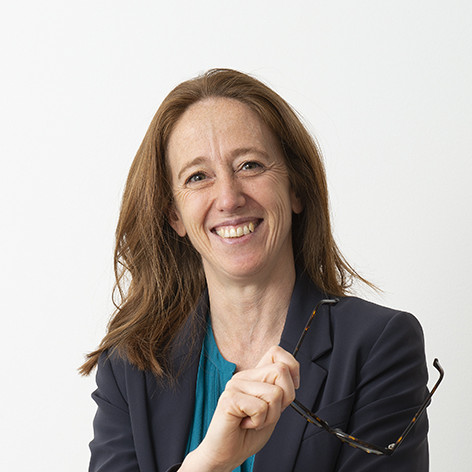
We talk to Nicoletta Alessi, Co-founder of Goodpoint.
We find out with Nicoletta Alessi Co-founder of GoodPoint in Milan, what is meant today by a Benefit Company.
For the past 11 years, GoodPoint – a consulting firm specializing in enhancing corporate social engagement – has been very consistently assisting companies large and small to build the path to social impact.
With Nicoletta Alessi we discuss three key points: the main elements of the study that GoodPoint conducted, examining the Articles of Incorporation and Im pact Reports of some 600 Benefit societies.
What are Benefit Societies?
“The Benefit Society is a company that pursues the purpose of profit, while at the same time giving itself the purpose-legally binding-of creating value for the Society. It therefore represents an innovative and virtuous business model, in the form that is well suited, however, to a way of doing business that is very old and very present in Italian entrepreneurship. Nicoletta Alessi continues: in Italy since 2016 the Benefit Society has been a legal form. Several companies claim to be “sustainable” or rather “responsible,” but being a Benefit Society is a way to give evidence both outside and inside the organization to its commitment. It is a way to measure and evaluate one’s ability to create value. Benefit Society in addition to observing and reporting results in terms of profit creation, the Benefit Society is called upon to account assess and give itself goals with respect to what the standard calls “common benefit” in addition to observing and reporting results in terms of profit creation, the Benefit Society is called upon to account, assess and give itself goals, with respect to what the standard calls “common benefit”; that is, the real benefit generated for people, the environment and the Society. In Italy currently nearly 3,000 companies are Benefit Societies a figure that is growing rapidly.”
What specifically is meant by common benefit?
“The impact purposes identified by the Company must be regularly stated in the corporate purpose, and then pursued in such a way that the management sees the interest of the Shareholders and that of the context protected in a balanced way at the same time. Through our research we have identified 5 Impact profiles, because companies tend to interpret the concept of Common Benefit in even very different ways. Wanting to simplify, we glimpse two prevailing attitudes: that of the Benefit company that assume as its duty towards Society that of “limiting the damage” of the business, thus postponing a vision for which the business is something intrinsically harmful, to be kept “made sustainable”; that of the companies that while recognizing as essential the assumption of responsibility towards the negative externalities of the business, seek in the business activity itself the Common Benefit, selling it as a tool for the creation of shared value. It is the same Entrepreneurs and Shareholders who value Benefit companies by making their business model effective, profitable and ready to believe in the future.”
Who does this Enterprise model work for?
“The Benefit Society model is being adopted by small, medium and large enterprises today. It is from our point of view not so much a way of being “sustainable” but a different “way” of doing “business” suitable for anyone who does not identify with pure profit-making and wants to contribute to the emergence of a new capitalism. The basic motivation for choosing it is this: it is the right outfit for chia has already chosen the basic approach. Then it also has advantages of course: strategic, first of all, because defining a clear purpose allows one to start, monitor and evaluate the activity based on what is most important to the entrepreneur: inward. Because it is a useful tool for lowering vision into practices and processes. Spreading and having concreteness to the corporate culture: outward. Because it is a way to stand out by telling about oneself purpose and values in which interlocutors can recognize themselves.”
We thank Dssa Nicoletta Alessi for answering our questions and invite you to download the full Goodpoint research by clicking on the this link.