
Luigi Lazzareschi
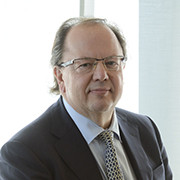
We talk to Luigi Lazzareschi, CEO Sofidel
What meaning does Sofidel give to the expression Sustainable Growth, now that sustainability is mainstream?
“Sofidel makes sustainability a strategic lever of development and growth, working to reduce its impacts on natural capital and maximize social benefits for all its stakeholders.
A philosophy encapsulated in the guiding principle “Less is More” that inspires every activity of the Group in creating shared value.
Ecological transformation, for a low-carbon and reduced natural capital economy, digitalization, and social inclusion are some of the priorities the Group has set in its work to create shared value.
It is true that we have become an international Group, but we are a company that was founded almost 50 years ago, unlisted and family-owned: these roots naturally lead us to always look far ahead and always think long term to go beyond individual generations.
This kind of approach is what has led us to put economic, social and environmental sustainability at the center of our strategy.
In particular, we work along three strands that relate back to sustainable growth: economic sustainability, which for us means production efficiency.
The renewal of technological assets used in the production process (paper mill and converting) is a key asset in terms of organizational efficiency.
Attention to technological assets is a constant throughout Sofidel’s history, which over the years has been able to build virtuous and lasting relationships with some of the industry’s leading suppliers.
Since 2016, this striving toward the future has been translated into a new and extensive work of renewing its technological assets.
Reducing the cost of logistics that has been and continues to be key in our strategy: we have 30 facilities designed to minimize distances and be more competitive both in terms of cost and in providing services in an extremely timely manner.
The lower environmental impact consequences of this approach are an obvious consequence of reduced transportation.
Finally, we think that leading company should aspire to grow more than its competitors, to have an economic return to support this growth, but all with an unavoidable positive social and environmental impact on the communities in which it operates.
In Sofidel back in 2008 we set ourselves very challenging goals in the areas of raw material sourcing, water consumption efficiency and emissions reduction.
I give two examples.
The Group applies strict policies for sourcing raw material from forestry sources and gives preference to suppliers who comply with the main forestry custody schemes.
100% of the pulp used in the production process comes from sources certified to FSC®, FSC Controlled Wood and PEFC™ standards.
In the 2000s we were the first Italian manufacturing company and the first in the world in the tissue sector to join the international WWF Climate Savers program, aimed at leading companies on the “low carbon economy” front, which proposed to voluntarily adopt plans to reduce greenhouse gas emissions through the definition and implementation of innovative strategies and technologies.
From 2009 to 2020, we have exceeded the targets we set ourselves: about 100 million euros have been invested in cogeneration plants, power generation from renewable sources, biomass power plants and energy efficiency activities, and to date, the Group has reduced direct CO2 emissions into the atmosphere by 24 percent.
But with this first phase of the pathway over, we immediately set ourselves new, more challenging targets to reduce, by 2030, climate-changing emissions from our operations (scopes 1 and 2) by 40 percent – mainly through increased use of energy from renewable sources – and, with respect to our suppliers’ pulp mill operations (scope 3), by 24 percent, in both cases relative to the 2018 base year.
Targets endorsed, I am pleased to point out, by the Science Based Targets initiative (SBTi) as consistent with the reductions needed to limit global warming well below 2°C, according to the Paris agreements.
Regarding packaging, as another example, Sofidel has set a goal of reducing the incidence of conventional plastics in its production by 50 percent by 2030, through the reduction of the thickness of plastic film used in the production process, the introduction of new kraft paper packaging, and the gradual use, in some markets, of recycled plastics or bioplastics.
To conclude, it is true, sustainability is mainstream today, all companies are talking about it, but very few have questioned and shared why they talk about it as a strategic business lever.”What are 10 reasons why the Sofidel Group places sustainability at the center?
“Being sustainable pays off.
Our approach is confirmed by the dimensions through which Sofidel measures its growth: in addition to turnover, margins, volumes and geographic coverage, another determining factor is, in fact, the social return in terms of well-being for the community.
With its commitment to sustainability Sofidel expects ten main benefits.
1- Cost reduction: using renewable sources, increasing plant efficiency, and reducing consumption of energy and environmental resources are also factors that result in increased economic efficiency, not just investments.
2 – Motivation and talent attraction: for the same pay, working for a socially and environmentally conscious company is more rewarding.
3 – Access to tax benefits: increasingly, governments and public institutions will penalize the most polluting companies fiscally while incentivizing, conversely, companies that invest in sustainable development.
4 – Raising market standards: investments in sustainability make a large contribution to this by making it more difficult to resort to unfair competitive practices.
A useful tool against so-called social and environmental dumping, activities through which some companies attempt to bring products to market at lower prices by offering inferior guarantees to workers or failing to comply with environmental protection regulations.
5 – Satisfaction of consumers today who are increasingly attentive and demanding in their search for sustainable products, services and companies in general.
6 – Adequate responsiveness to customer demands, for example in the area of private labeling: this is the ability to respond positively to environmental and social qualification criteria that public administrations and customers include in their purchasing procedures, i.e., increased chances of winning supplies and developing strong and lasting partnerships.
7 – Anticipating increasingly stringent regulations and being ready for them: sustainability is a powerful cultural leaven of technical and organizational innovation that enables anticipation of legal requirements.
This makes it possible to reduce operational risks, improve dialogue with public authorities, and accumulate competitive advantages.
8 – Increasing its credibility and trust: an enterprise that operates sustainably is one that works to be fully transparent.
9 – Facilitating access to capital: a sustainable enterprise is one that has a competitive advantage in dealing with banks and financial institutions.
10 – Reputation growth: stakeholders increasingly value companies for the values they embody, and in this sense, commitment to sustainability also translates into improved stakeholder perceptions of the company.
A good reputation is a key intangible resource that contributes significantly to value creation for the brand and the company.”
What is the secret in having been able to innovate in a seemingly traditional market and how to continue to innovate in the future?
“The secret is to never be content,” the entrepreneur is never happy and satisfied, which is why he never stops: having a desire to grow and always invent new solutions, being curious and looking ahead in the long run is the only way to make the business grow.
We often try to be “futurologists,” obviously based on socio-economic research and surveys, to understand what the market developments will be.
For example, today we are pondering the impact of such a long period of health emergency on our type of products: we think that certainly hygiene will become increasingly important to people, but also their demand for more and more tailor-made solutions.
Indeed, we foresee a consumer who is extremely demanding and accustomed to a wide speed of response to their requests: with this in mind, we are studying the world of e-commerce and thinking about a marked personalization of products.
However, I would like to stress again the importance of values: while it is true that we must give concrete answers to new consumer demands, we leading companies must also lead by example with the sense of responsibility proper to those who chart the course: in the area of sustainability, not only is sustainable behavior our duty, but we must also try to involve our entire production and value chain: for example, by helping smaller players to improve their environmental performance, giving them frameworks but also by setting selection criteria that bar the way for working with suppliers who do not meet the required standards, exercising our bargaining power.
“Clean living. For everyday needs. For a healthier planet. For integrity and respect.” is our purpose that well defines our role in society and the benefits we intend to bring to people and the planet, which can be summarized as follows: to promote hygiene, safety and health to help people improve hygiene and cleanliness through our products; to produce cleanly to protect the environment through an approach to production inspired by the “ecological transition”; and to be ethical and clean as a company to build a sustainable business culture.
The relationships we develop with all our stakeholders are inspired by respect for the values of professionalism, practicality, honesty, ethicality and transparency and the pursuit of practices of inclusion, sharing, participation and fair information.
An approach based on integrity of behavior and mutual respect to help build a positive future for people and the planet.”