
Nicholas Lamberti
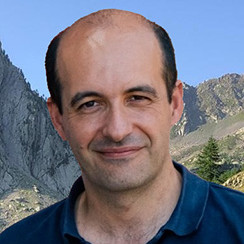
We talk to Nicola Lamberti, founder of Alimentiamoci
Dr. Lamberti, in the case of Alimentiamoci, the company that provides the Planeat service, do business values shape the business?
“Creating new value through maximizing the common good must be the starting point for creating any enterprise, in any sector.
The model represented by Planeat in food-a new way of grocery shopping, starting with recipes and receiving all ingredients at home ready to prepare, weighed and divided into compostable containers-reflects a business culture that puts everyone’s good first, certainly including that of the business itself, but not only.
The question we need to ask ourselves before embarking on a new entrepreneurial path is: what is the path that tends to the good of all?
Often we are guided by the search for solutions that maximize personal gain or that circumscribed to the enterprise itself, in a somewhat self-referential way, without attention to all that surrounds us and of which we are an integral part.
Instead, from my professional experience, I can say that the paths taken without an immediate return, but rather in the medium and long term and that intend to positively impact society and the environment, are the ones that lead to the discovery of valuable treasures: innovative solutions that leave a benefit for all.
Planeat is an example of this: it is innovation serving the environment, health and the economy of the area.” How was Planeat born?
“From putting different people, partly unknown to each other, around the same table, united by a common business culture: one that places innovation and the common good at the center of its actions and that believes that fruitful synergies between different experiences, skills and sensibilities arise from dialogue.
In the case of Planeat, we brought together some colleagues, coming as I did from the experience of a successful e-commerce business, with professionals who came from different backgrounds: each, thanks to his or her experience, brought his or her idea and we joined forces to create from three different business ideas, all in the food field, a single strong idea that could be competitive in a very challenging market such as the food market.
We studied the baseline scenario to figure out where we could maximize our impact for the common good: food waste, food quality, diet balance, and respect for the planet… these may seem like impossible challenges!
However, I always keep in mind the invitation of Scouting movement founder Robert Baden-Powell: “Try to leave this world a little better than you found it.”
I would like to emphasize that “a little” better here: we should not propose to solve the great issues of our time, but engage in breaking down and analyzing problems to try to solve them a little at a time, thus removing any form of excuse that might suggest that the task is too big and therefore beyond our reach.
And so we broke down the world of food to analyze the indiscriminate use of plastic, the relationship between producers and distribution that often sacrifices small, quality companies, or the big issue of food waste, which has reached about 35 percent of what is produced in Europe and is largely concentrated within the home (22 percent).
The idea that Planeat proposes to users is this: plan all the meals of the week starting with the dishes you want to eat day after day and receive everything you need already perfectly portioned and ready to be cooked; it is a paradigm shift from the classic habit of weekly shopping that starts from buying the ingredient to cooking what is in the kitchen at mealtime.
Our company buys quality ingredients, prepares them by the gram, washing and slicing them according to recipe and taking into account customers’ tastes, and places them in biodegradable containers that are delivered to their homes, ready to be cooked during the week.
Food waste and plastic use are thus zeroed out, with benefits in terms of health and time savings, but also with the implication of rediscovering our extraordinary culinary culture, often cast aside for reasons of time.
And here problems of global scope, which are immense, become, once broken down, within our reach.”
How do you see the future of Planeat, what are the next steps?
“Technological development, increasing involvement of users-already now through QR code printed on labels one can get a lot of culinary and environmental impact information-and creation of personalized services with the aim of facilitating a healthy and balanced diet.
Net of the fact that we are at the beginning of this new entrepreneurial adventure, in our vision we imagine a development similar to franchising, in Italy as abroad: in addition to the values of the company, which must remain intact, the development and maintenance of a technological infrastructure of excellence is central.
So the model and software may be centralized, but the remaining part, from logistics to the zero-mile purchasing center, can only be managed locally, in order to create a solid, innovative and at the same time efficient and flexible structure.”