
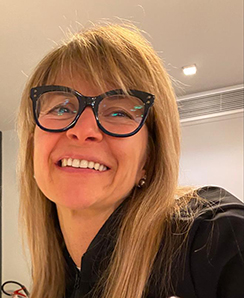
Claudia Persico
Giacomo
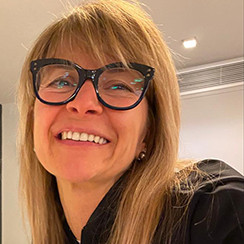
We talk to Claudia Persico, VP Sales & Marketing at Persico Group.
Persico is a leading multinational company in the automotive, industrial and marine sectors as a provider of a full range of services: what is your driver of innovation?
“Human capital is undoubtedly our main resource.
People in Persico are at the center, consider that we have between 550 and 600 resources: we try to make the most of all of them, and we consider it vital to create the right conditions to foster a cross-fertilization of experiences between different areas.
We have also recently changed our organizational structure model in order to be able to expand and enhance even more the R&D function, which is of fundamental importance to us.
Today we have a matrix organizational model that creates a great deal of synergy between the various production units in order to foster dialogue and a smooth exchange of ideas between people who are involved in different businesses.
Third pillar for innovation is partnerships of excellence with companies and research centers.
One example is our collaboration with Intellimech, a private consortium of large, medium and small companies aimed at interdisciplinary research in the field of mechatronics for applications in different industries.
Within it, we have a fruitful exchange with companies from different industries but all oriented toward finding disruptive solutions that can compete in the increasingly difficult international arena.
Finally, in a business as specific as ours, the fourth pillar of innovation is the company’s know-how and the ability to transfer it through people: the focus must run through the entire production chain, and that is why we are starting an internal Academy, in order to give a training and growth path to people, especially the younger ones.”Tell us about this innovation, the Persico Academy
“It is precisely an innovation that we have been working on for a few months but in which we believe very much.
It is about building structured training and professional development paths for our resources, with measurable and objective criteria.
First, we aim to identify employees’ key competencies, both soft and hard skills, in order to develop high potentials.
At the same time, we want to systematize training processes over time, so as to activate growth paths consistent with the role, skills and development of the organizational chart.
The idea is to set up not just vertical but horizontal career paths, giving people the opportunity to move across different areas.
With the Academy, we aim to increase the sense of belonging to the company, attract and retain talent and consolidate the company’s values, for which, moreover, we are working on the drafting of what will be a real Persico Charter of Values: a document that will then be shared with staff at all levels, but also with our main external stakeholders, such as customers and suppliers.
Finally, I want to emphasize how a project focused on resource growth will give us the opportunity to increase our ability to listen to people, which is increasingly important for creating a solid, trusting, long-term relationship.”What drives you to do business: passion, striving for improvement…
“I answer with one key word: responsibility.
Personally, I grew up immersed daily in this company, which was founded over 40 years ago by my father: I breathed its air as a child and in a way grew up with it, for example, I started learning English by being a switchboard operator in the summer during my high school years.
Its values as well as the type of business are in the DNA of those of us at its helm!
The sense of responsibility we feel toward all stakeholders in this company is profound and leads us in the choices we make every day.
We know that our operations have an impact on the communities in which we operate, but also on the environment.
That is why we have put in place a series of sustainable development policies, the flagship of which is the restarting of two hydro-electric power plants dating back to 1921, purchased in the expansion of one of our production sites: an investment that integrates sustainability into the business, making our plant energy self-sufficient and also providing energy for the market in the area.”

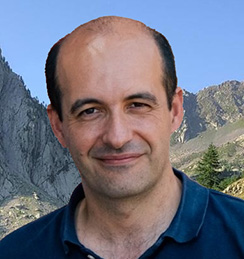
Nicholas Lamberti
Giacomo
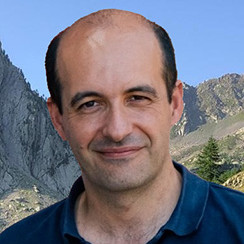
We talk to Nicola Lamberti, founder of Alimentiamoci
Dr. Lamberti, in the case of Alimentiamoci, the company that provides the Planeat service, do business values shape the business?
“Creating new value through maximizing the common good must be the starting point for creating any enterprise, in any sector.
The model represented by Planeat in food-a new way of grocery shopping, starting with recipes and receiving all ingredients at home ready to prepare, weighed and divided into compostable containers-reflects a business culture that puts everyone’s good first, certainly including that of the business itself, but not only.
The question we need to ask ourselves before embarking on a new entrepreneurial path is: what is the path that tends to the good of all?
Often we are guided by the search for solutions that maximize personal gain or that circumscribed to the enterprise itself, in a somewhat self-referential way, without attention to all that surrounds us and of which we are an integral part.
Instead, from my professional experience, I can say that the paths taken without an immediate return, but rather in the medium and long term and that intend to positively impact society and the environment, are the ones that lead to the discovery of valuable treasures: innovative solutions that leave a benefit for all.
Planeat is an example of this: it is innovation serving the environment, health and the economy of the area.” How was Planeat born?
“From putting different people, partly unknown to each other, around the same table, united by a common business culture: one that places innovation and the common good at the center of its actions and that believes that fruitful synergies between different experiences, skills and sensibilities arise from dialogue.
In the case of Planeat, we brought together some colleagues, coming as I did from the experience of a successful e-commerce business, with professionals who came from different backgrounds: each, thanks to his or her experience, brought his or her idea and we joined forces to create from three different business ideas, all in the food field, a single strong idea that could be competitive in a very challenging market such as the food market.
We studied the baseline scenario to figure out where we could maximize our impact for the common good: food waste, food quality, diet balance, and respect for the planet… these may seem like impossible challenges!
However, I always keep in mind the invitation of Scouting movement founder Robert Baden-Powell: “Try to leave this world a little better than you found it.”
I would like to emphasize that “a little” better here: we should not propose to solve the great issues of our time, but engage in breaking down and analyzing problems to try to solve them a little at a time, thus removing any form of excuse that might suggest that the task is too big and therefore beyond our reach.
And so we broke down the world of food to analyze the indiscriminate use of plastic, the relationship between producers and distribution that often sacrifices small, quality companies, or the big issue of food waste, which has reached about 35 percent of what is produced in Europe and is largely concentrated within the home (22 percent).
The idea that Planeat proposes to users is this: plan all the meals of the week starting with the dishes you want to eat day after day and receive everything you need already perfectly portioned and ready to be cooked; it is a paradigm shift from the classic habit of weekly shopping that starts from buying the ingredient to cooking what is in the kitchen at mealtime.
Our company buys quality ingredients, prepares them by the gram, washing and slicing them according to recipe and taking into account customers’ tastes, and places them in biodegradable containers that are delivered to their homes, ready to be cooked during the week.
Food waste and plastic use are thus zeroed out, with benefits in terms of health and time savings, but also with the implication of rediscovering our extraordinary culinary culture, often cast aside for reasons of time.
And here problems of global scope, which are immense, become, once broken down, within our reach.”
How do you see the future of Planeat, what are the next steps?
“Technological development, increasing involvement of users-already now through QR code printed on labels one can get a lot of culinary and environmental impact information-and creation of personalized services with the aim of facilitating a healthy and balanced diet.
Net of the fact that we are at the beginning of this new entrepreneurial adventure, in our vision we imagine a development similar to franchising, in Italy as abroad: in addition to the values of the company, which must remain intact, the development and maintenance of a technological infrastructure of excellence is central.
So the model and software may be centralized, but the remaining part, from logistics to the zero-mile purchasing center, can only be managed locally, in order to create a solid, innovative and at the same time efficient and flexible structure.”
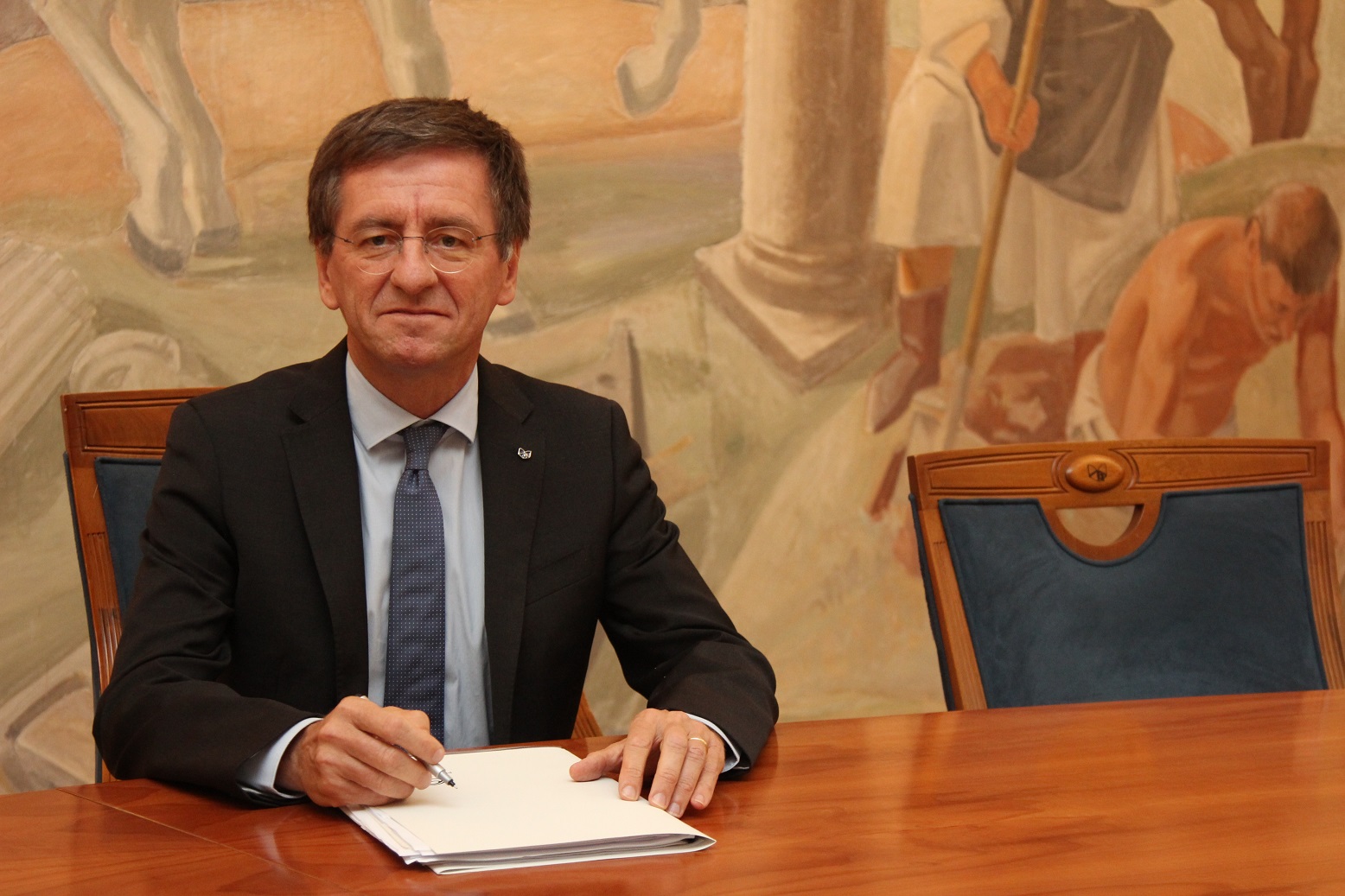
Mario Crosta
Giacomo
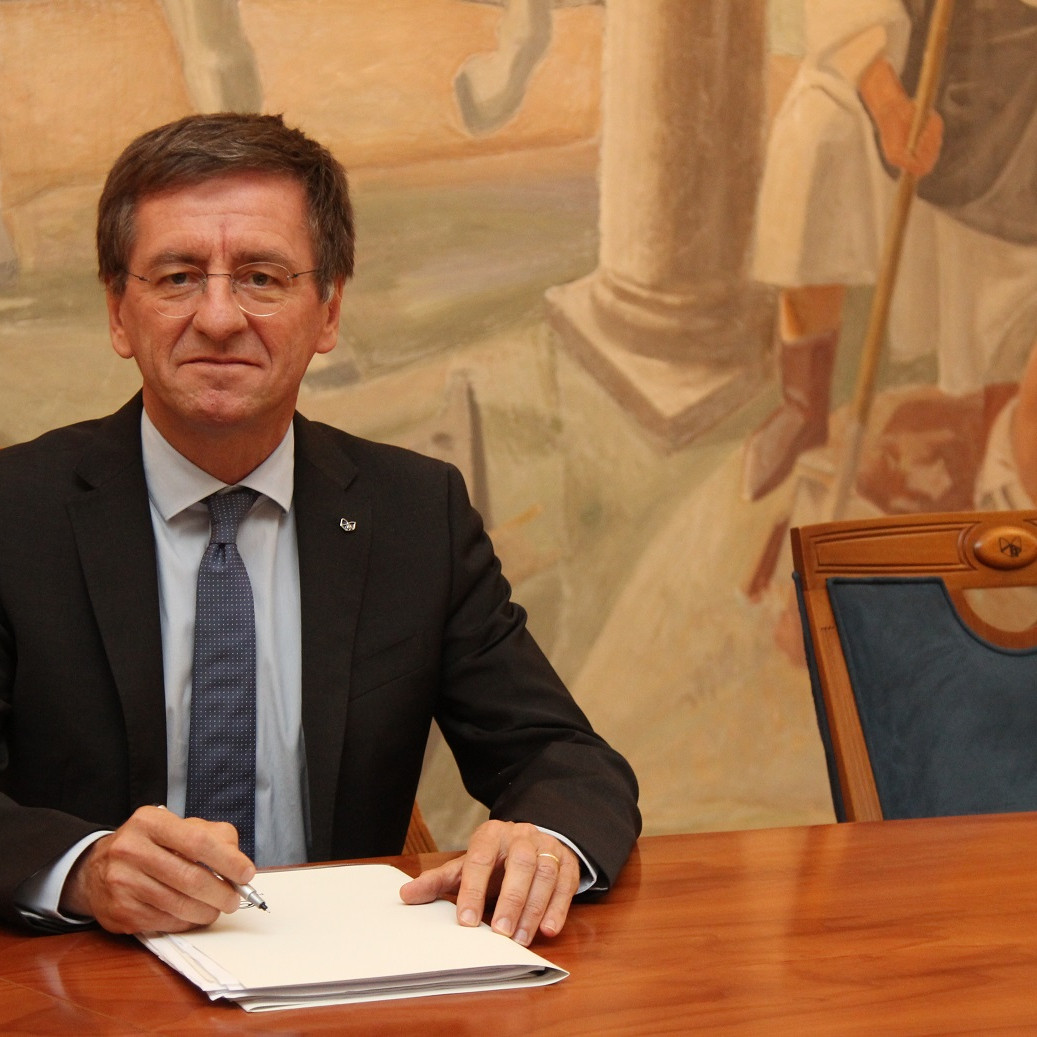
We talk to Mario Crosta, general manager, Bank of Piacenza
The Bank of Piacenza was established in June 1936 with the specific purpose of supporting any worthwhile initiative, in the territories of settlement, worthy of support.
It has established and characterized itself over the years as a bank serving savers and economic operators, maintaining a relationship of mutual and solid trust with the people that has enabled it to achieve important (and unhoped-for) goals.
While maintaining its identity as a “local bank,” it has managed to become, step by step, a bank that has transcended the boundaries of its initial province of establishment: the Bank of Piacenza has branches in the city and branches both in the province and outside the province, hundreds of employees work with it, and it expresses an increasingly large amount of both deposits and loans.
What role does the local bank play in the area?
“It is a key role in a country like Italy, which is made up of a parceled entrepreneurial fabric consisting of many small and medium-sized enterprises: the local bank has the task of supporting the economy of the area with a very strong symbiosis between the real economy and the activities that the bank can carry out.
In recent years, new European regulations have introduced rules that do not simplify but rather complicate the provision of credit, forcing banking institutions to rely solely on numerical parameters and algorithms.
Here, then, emerges even more strongly the importance for the bank to maintain a strong relationship with the territory, a solid and continuous relationship.
I am not only referring to families, but also to SMEs, with the aim of making a contribution to their development processes and helping them to be competitive in the global context in which they move, thanks to tailor-made advice and financial support.
Consider that the Bank of Piacenza has 52 branches distributed-as well as in the province of Piacenza-to the provinces of Parma, Cremona, Lodi, Genoa, Pavia and Milan: it is a size that places us among the top 60 banks/banks out of more than 600, but which allows us to be close and attentive to our more than 15,000 members.” What values distinguish cooperative and community banks?“Two key words for us when we talk about values: cooperation and passion for the territory.
The Bank of Piacenza is a cooperative bank, so the rule of capital voting, a very important element of democracy, continues to apply with us.
Instead, when we talk about passion for the area, we are referring to people, companies-small, medium or large-but also to the ancient and contemporary artistic and cultural heritage: by enhancing it, we manage to create a virtuous circle of shared value that can also create an economic impact on the community.
The example of which we are particularly proud dates back to last year: our bank supported and promoted the recovery of the ancient artists’ walkway-the “Ascent to Pordenone”-which allowed thousands of people to admire up close the frescoes in the Dome of Santa Maria di Campagna created by the Mannerist master Giovanni Antonio de’ Sacchis known as Pordenone.
This activity also created an unhoped-for inducement in terms of tourism in the city, bringing as many as 110,000 people from the rest of Italy and abroad, and becoming the highlight event of the 2018 Piacenza cultural season.
But beyond such wide-ranging initiatives, consider that we support many associations at the cultural, social and sports levels, and we host at least a couple of events at our headquarters every week, ranging from those more strictly in the socio-cultural sphere to those organized in our spaces by corporate clients.” How can a land bank deal with the challenges of today’s financial world?
“With flexibility, breadth of customized service offerings and their high quality.
At the Bank of Piacenza we are committed with a sometimes maniacal dedication to the study and offering of services that are the result of our continuous search for the highest quality; our agile size allows us to choose the best organizations in the market with which to collaborate, both in our management systems and in the development of financial products that we seek personalized and in step with the times.
An example of this is the information system that we have entrusted, in consortium with other territorial banks, to CSE, of which we are members; as well as the asset management products: since we do not have our own to offer exclusively to customers, we can choose, depending on the need of the interlocutor, the most suitable one.
If he adds, finally, the understated style in which our customers recognize themselves and the streamlined and fast structure that characterizes us, here are found the final ingredients that make us a true partner and financial advisor for businesses and families.”
Edison
Edison
Edison is the oldest energy company in Europe, with 140 years of records, and is one of Italy’s leading industry players with activities in the procurement, production and sale of electricity and natural gas and in energy and environmental services.
The company is engaged at the forefront of the energy transition challenge, through the development of renewable and low-carbon generation, energy and environmental services, and sustainable mobility, in full alignment with the objectives defined by the European Green Deal.
Edison has a highly flexible and efficient power generation fleet of more than 250 power plants including hydroelectric, wind, solar and high-efficiency combined-cycle gas-fired thermoelectric plants.
Today it operates in Italy and Europe, employing more than 6,000 people.

Domus Editorial
Domus Editorial
Editoriale Domus is among Europe’s leading family-owned publishing companies and is a leader in the fields of cars and motorcycles, architecture and design, travel and cooking with prestigious and authoritative brands.
It is active in periodical, book, internet, digital and professional publishing.
It has built a circuit for detecting the performance of cars, motorcycles and heavy vehicles, and carries out training programs.
The database built over the years and the quotation system have given rise to a specific business in great development and of strategic advantage to the company.
The publishing house has been able to develop with its own brands (Domus, Quattroruote, Ruoteclassiche, Top Gear, Due Ruote, XOffRoad, Tuttotrasporti, Meridiani, Meridiani Montagne, Il Cucchiaio d’Argento) an effective information system to guide the reader’s choices and meet the communication needs of companies.
In the wake of its brilliant founder Gianni Mazzocchi, a great forerunner in the publishing field, the company has always believed in innovation, investing in new media to update and integrate the way publishing is done.
It operates through licenses and collaboration agreements to spread its brands internationally.
Good Work Foundation
Good Work Foundation
The Buon Lavoro Foundation(www.fondazionebuonlavoro.it) aims to define, support and disseminate Good Enterprise, and its natural social role, and Good Work as a source of personal fulfillment, thus making its small contribution to the transition to an economy at the service of Man.
Speech by Cavalier Michele Alessi, President of the Buon Lavoro Foundation, at the TEDx in Verbania: click here “The Manifesto of Good Enterprise,” produced by the Buon Lavoro Foundation: click here
Policlinico Universitario Campus Bio-medico Foundation
Policlinico Universitario Campus Bio-medico Foundation
The Policlinico Universitario Campus Bio-Medico Foundation is a nonprofit organization that pursues the goals of protecting and promoting the human person in the areas of health care, education, scientific research and innovation in biomedical and health care, both clinical and translational.
It is entrusted with the management of the University Polyclinic, which operates in synergy with theCampus Bio-Medical University of Rome, a non-state university founded in 1993 with the aim of creating a cultural project capable of re-proposing the value of the person at the center of biomedical sciences. Inaugurated in 1994 in Via Emilio Longoni and moved to its new location in Trigoria since 2008, the University Polyclinic is home to the UCBM Departmental Faculty of Medicine and Surgery and is characterized by thesynergistic exercise of care, teaching and research activities.
Attention to the patient’s personal situation, reception and compliance with the highest international standards of safety and quality and modernity of hospital equipment constitute essential elements of health care.
Each patient has a referring doctor and nurse, who are his or her contact persons.
Peculiarity of the facility is precisely the interdisciplinary and team working method, which involves different professional skills both within individual areas and between different Units and services.
The Polyclinic is committed every day to offering the highest level of personal care and assistance, thanks to the work of so many professionals lived with responsibility and a Christian spirit of service, according to the teachings of St. Josemaría Escrivá, founder ofOpus Dei. The facility is equipped with more than sixty Operating Units.
It provides health care in agreement with the National Health Service and privately.
It includes outpatient services, day-hospital, day-surgery, multidisciplinary inpatient wards organized according to intensity of care and an Emergency Room – Level I DEA designed according to the most advanced quality and safety standards.
It stands at the center of a modern university campus immersed in the Decima Malafede Nature Reserve, in the vicinity of Rome’s Eur district.
Accompanying the panorama of care offerings are the Center for the Health of the Elderly and the Palliative Care Center “Together in Care,” also in Trigoria, and the Oncology Radiotherapy Pole in the Prenestino neighborhood.

Gecofin
Gecofin
58 Cornaggia Street tel. +39 02 66022226 info@gecofin-spa.com – www.geico-spa.com
Gecofin Spa is an Italian holding company based in Cinisello Balsamo (Milan) and privately owned by the Arabnia/Neri family.
The Group’s activities are many and diversified, ranging from the industrial sphere and in particular the automotive sector with Geico in which it holds 100 percent of the shares, to the real estate management services sphere to the social sphere with a deep sense of purpose and respect toward stakeholders and their communities.
Gecofin was founded in Milan in 1976 by Eng.
Giuseppe Neri-one of the greatest experts in the engineering system of the automotive painting process as well as CEO of Drysys Equipment Italiana of the Carrier-Drysys Group in Italy-with the primary objective of taking over the Italian division of Carrier-Drysys (future Geico).
The spirit of this intervention, which is based on safeguarding the business and the welfare of its stakeholders, forms the value base of the family, which over time has undertaken a series of financial and industrial operations to ensure the company’s innovative and socially responsible existence.
In 1995, Ali Reza Arabnia together with his wife Laura Neri acquired the majority of Gecofin shares in a management buy-out and became the Group’s CEO, and in 2000, he completed the transaction by acquiring the entire share capital of Gecofin, guided by the same spirit as the founder, putting the company’s continuity first.
Always characterized by a profound sense of ethics, respect, loyalty and protection of its community – internal and external – Gecofin, through the Pardis project, aims to concretely and effectively support projects of a varied nature – in the fields of medical-health, scientific research, of education, social, employment (with a special focus on young people), environmental, cultural – starting from the corporate micro-community to the macro-community of the territory, up to the country system, basing its mission on the conviction that at the root of the concept of sustainability is the well-being of people.
Geico Spa
Geico Spa
Via Pelizza da Volpedo 109/111 tel. +39 02 660221- fax +39 02 66022310 info@geico-spa.com – www.geico-spa.com
Geico is a Global Supplier for the turnkey supply of paint plants/departments for major automakers worldwide.
Its origins go back to the Carrier-Drysys group founded in 1908.
The Italian division, called Drysys Equipment, was born from a joint venture with Neri & Mandelli, an engineering company founded in 1963 in Milan by Iingegner Giuseppe Neri and his friend Mandelli.
The aftermath of the oil crisis, terrorism and the almost total block of investment in the target sector led to the near closure of the division in 1976 when Iingegner Giuseppe Neri proposed to acquire the majority of the company in a management-buy-out operation, also changing the company’s name to Geico S.p.A. The spirit of this intervention, which is based on safeguarding the business and the well-being of its stakeholders, forms the value base of the family, which over time has undertaken a series of financial and industrial operations to ensure the company’s innovative and socially responsible existence.
Today Geico, owned by the Arabnia-Neri family, is considered one of the most advanced companies in the automotive sector on a global scale, both at the technological and human level, because it has always had as its ultimate goal, the development and continuity of the company in the interest of its stakeholders.
Respect and a sense of responsibility towards people and the environment, gratitude towards what is received from inside and outside the company, and the courage to face complex situations are the values that accompany its community made up of people of the highest professional and ethical level.
HUWARE
HUWARE
“Innovation is made by people, not machines” is the mantra of Huware, a company that supports Italian companies in their business transformation journey by bringing together three assets: people, processes and technology.
Enabling technology is a tool Huware uses to make efficiency, collaboration and people engagement, increase sales, and introduce a data-driven mindset.
Historical premier partner of Google Cloud, Lumapps and Sales Force in every Huware project the person is at the center of change, the real engine for achieving the company’s strategic goals.
Through the use of engaging methodologies such as design thinking, creative brainstorming, envisioning, and co design Huware accompanies entrepreneurs and managements in the difficult mission of adapting their companies to current or future changes by introducing smart and easy-to-use technologies.
Headquartered in Milan, while Casa Huware is located in Gualdo di Macerata.
a farmhouse nestled in the Marche countryside where Huware employees, customers, partners and community do immersive work sessions and team building.